6. Black Ecologies
DESCRIPTION NEEDED HERE
- 6.1 - How Does This Framework Define Sustainability?
- 6. 2 - What are the Key Approaches/Tools Used in this Sustainability Framework?
- 6.3 - NEED A TITLE FOR THIS PAGE - Cancer Alley, Maybe?
- 6.4 - NEED A TITLE FOR THIS PAGE
- 6.5 - NEED A TITLE FOR THIS PAGE
- 6.6 - NEED A TITLE FOR THIS PAGE - Lessons Learned with this Framework? (Maybe)
- 6.7 - NEEDS A TITLE FOR THIS PAGE - Towards Collective Liberation? (Maybe)
6.1 - How Does This Framework Define Sustainability?
Key Guiding Questions (expanded)
How does this framework define sustainability?
Black ecologies views sustainability not just as ecological stability, but as an antiracist, abolitionist, and autonomous reality where Black life and communities can flourish with political and economic agency, respectful, reciprocal, and generative ecological relationships, reconnecting with land, and building collective wellness rooted in a vibrant tradition of mutual aid and insurgent knowledge.
What vision is being seeded or sustained? (who benefits and who is harmed by sustaining this vision?)
It envisions an end to antiblackness, environmental racism, and ecocidal capitalism, “while passing on cultural traditions, ecological and world-sustaining knowledge, and zones of refuge that allow us to imagine and produce beauty and joy in our environments.” – Hosbey et al 2022
“Black ecologies are an abolitionist vision of futures rooted in multispecies kinship, freedom, ecological stewardship, racial justice, Black repair, and social equity” – Moulton and Salo 2022
In Black ecologies there is an explicit liberatory vision for racialized communities of color, particularly Black communities, and the places they draw sustenance from, both of which have been historically and systemically subjugated by white supremacy, colonialism and racial capitalist power structures. In terms of costs (contamination and environmental destruction), this framework dissipates costs by calling for the dismantling of dominant power structures that perpetuate environmental and social injustices upon poor, working class, and communities of color as well as interrupting the processes that end in wastelanding, pollution, and extirpation of large tracts of ecosystems.
Who is defining/driving this vision?
There has been a long tradition of Black ecologies (despite the recently coined term) and Black geographies for centuries, but more recently, Black ecologies is a framework carried forth by Black scholars, community organizers and leaders, as well as practitioners, and other allies / accomplices. Refer to the ‘Voices of Black Ecologies’ section.
abolitionist : Ruth Wilson Gilmore states that “abolition is a constant becoming” that “interrupts harm perpetuated by policing, incarceration, and detention of racialized, ciminalized and undocumented communities to build infrastructures that reduce harm without relying on oppression and violence” (Snider 2022, Simpson center). In addition to Wilson Gilmore, prominent writings include works by Mariame Kaba and Angela Davis.
Hosbey, J, Lloréns, H, and JT Roane. 2022. Introduction: Global Black Ecologies. Environment and Society: Advances in Research 13: 1-10 10.3167/ares.2022.130101
Moulton, AA and I Salo. 2022. Black Geographies and Black Ecologies as Insurgent Ecocritism. Environment and Society: Advances in Research 13: 156-174 10.3167/ares.2022.130110
6. 2 - What are the Key Approaches/Tools Used in this Sustainability Framework?
Black ecologies originated as a critique to mainstream environmentalism’s disconnect from poor Black urban communities that were subject to intentional contamination and divestment (Hare 1970). Moreover, mainstream environmentalism in the Global North has functionally erased Black ecological relations and separated them as environmental justice issues. Yet, it is through Black ecologies that we can not only unpack how anti-Blackness is encoded in environmental work, studies, writings, practices, and policies (Hosbey et al. 2022), but how it is a transformative framework that has 3 principal aims (Williams 2023):
- historicize environmental injustices,
- document insurgent and otherwise practices of Black eco-relations, and
- examine how Black ecological knowledge encompasses alternative and sometimes insurgent possibilities for transformative sustainable environmental futurities.
Firstly, Black Ecologies “historicize the ongoing reality that Black diasporic communities are most susceptible to the impacts of climate change, polluted air, soil, and waterways, and ecological calamities from hurricanes to landslides linked to intentional contamination and divestment of Black communities” (Williams 2023). In essence, Black Ecologies link the broader historical and contemporary context of systemic racism and the widespread “unwillingness to account for past and current imperial injustices” (Karera 2019) within environmental and sustainability fields. Instead, dominant sustainability discourse upholds and advances extractivism and disposability of the environment and human lives “by centering efforts at decarbonization through support for so-called green technologies without a commitment to the end of capitalist regimes of extraction, accumulation, and disposability.” (Hosbey et al 2022).
As Hosbey et al (2022) state, Black ecologies “challenge the enduring evasion of insights of Black histories, Black intellectual thought, Black social and political movements, and Black Studies” within theory, conceptualizations, conversations and practice of environmental and sustainability fields.
https://www.axios.com/local/chicago/2022/02/17/chicago-redlining-then-and-now
Hare, Nathan. 1970. “Black ecology.” The Black Scholar 1 (6): 2–8. https://doi.org/10.1080/00064246.1970.11728700.
Karera, Axelle. 2019. “Blackness and the Pitfalls of Anthropocene Ethics.” Critical Philosophy of Race 7 (1): 32-56. https://doi.org/10.5325/critphilrace.7.1.0032.
6.3 - NEED A TITLE FOR THIS PAGE - Cancer Alley, Maybe?
To ground this first aim of Black Ecologies, let’s analyze the powerful case study of Louisiana’s “Cancer Alley” which is located within an industrial stretch of the Mississippi River between the U.S. cities of Baton Rouge and New Orleans. Cancer Alley is a region with predominantly Black and working class communities and it is one of the most highly polluted areas in the US with some counties (also locally called ‘parishes’) with as many as ~13,000 cases of cancer. Despite this public health crisis, Louisiana continues to approve new plants and the expansion of existing ones.
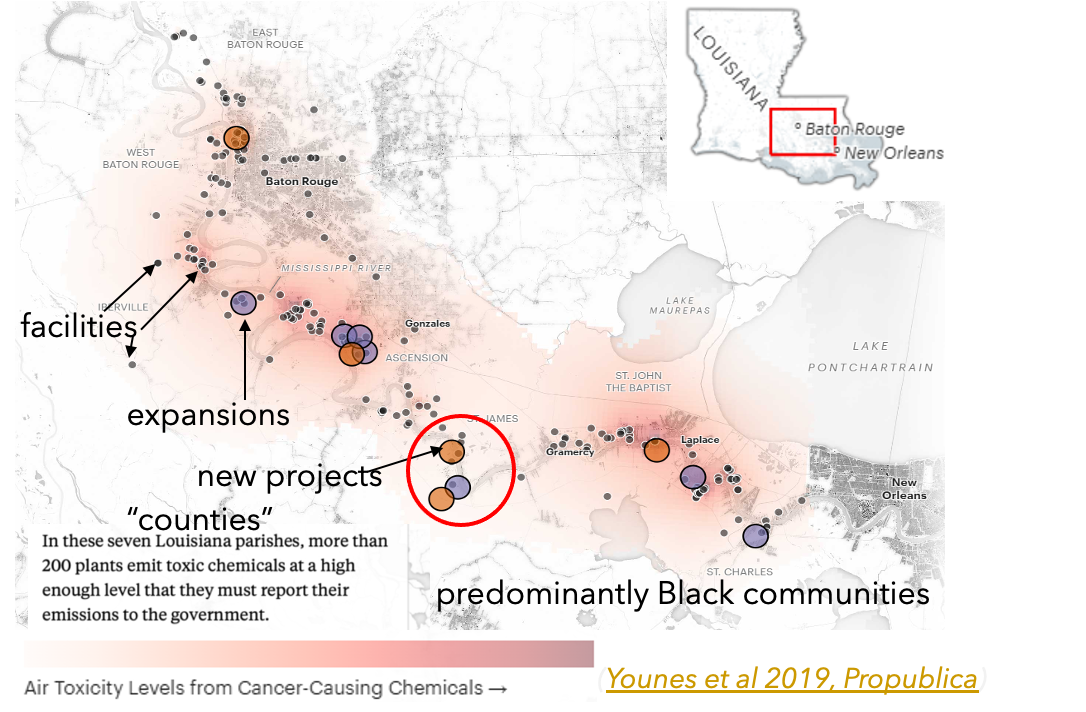
(Source: Younes et al 2019, Propublica)
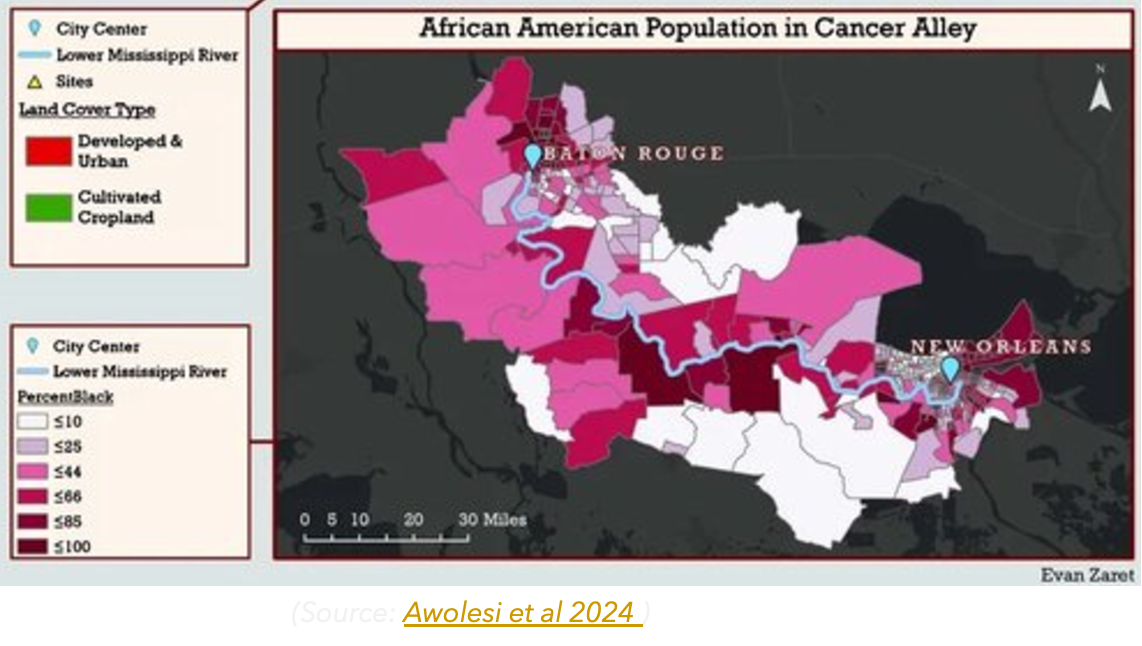
(Source: Awolesi et al 2024)
Studies show that Black people are 75% more likely to live near oil and gas refineries, and Black Americans face higher risks of premature death from power plant pollution (Fleischman and Franklin 2017) .
Consider the following questions:
1. At the end of the article, you are prompted to “Look up an address, ZIP code or landmark within East Baton Rouge, West Baton Rouge, Iberville, Ascension, St. James, St. Charles or St. John parishes to find how toxic the air is.” Go ahead and use this tool for a couple of locations and report on what you found.
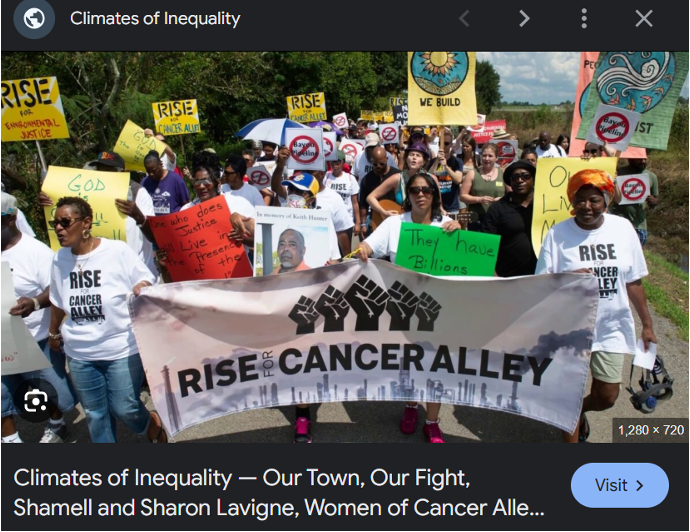
2. Take a moment to search for organizing and actions that the affected communities have done to defend and protect themselves and their families? What has been the result?
3. Compare the two map images above. On the left, the map shows the location of existing and planned expansions or new power plant facilities. On the right, we see the percent of the population within each parish that is Black. What are some of the spatial patterns that you notice where overlaps do (or don’t) occur?
4. This propublica report was published in October 2019. See if you can find if any of the proposed new plants or plant expansions did indeed go into effect and what is the most recent news regarding this case.
5. How does this case study exemplify Black Ecologies?
6. Read the methodology for the analysis done at the link below.
https://www.propublica.org/article/how-we-found-new-chemical-plants-are-being-built-in-south-louisianas-most-polluted-areas
a) Write a summary of what you understand are the key parts of the methodology.
b) What is the difference between data obtained through a model and data obtained empirically?
c) Why is this study a powerful example of using an EPA model to promote change and justice?
d) What are the questions that arise for you?
Additional reading:
https://www.axios.com/local/chicago/2022/02/17/chicago-redlining-then-and-now
Fleischman and Franklin. 2017. Fumes Across the Fence Line: the health impacts of air pollution from oil and gas facilities on African American communities. NAACP & CATF Report: https://naacp.org/resources/fumes-across-fence-line-health-impacts-air-pollution-oil-gas-facilities-african-american
6.4 - NEED A TITLE FOR THIS PAGE
Another important aim of Black ecologies is to document insurgent and otherwise practices of Black eco-relations. Dr. Kathryn Benjamin Golden focuses on insurgent black ecologies that were essential to maroon communities, that is ‘fugitive’ people that escaped slavery in the 18th century, within in an area of the eastern so-called US known as the Great Dismal Swamp. This wetland area of over 2 km squared became home to thousands of maroons who rooted their lives as free people protected by the wilderness of the swamps for over two centuries.
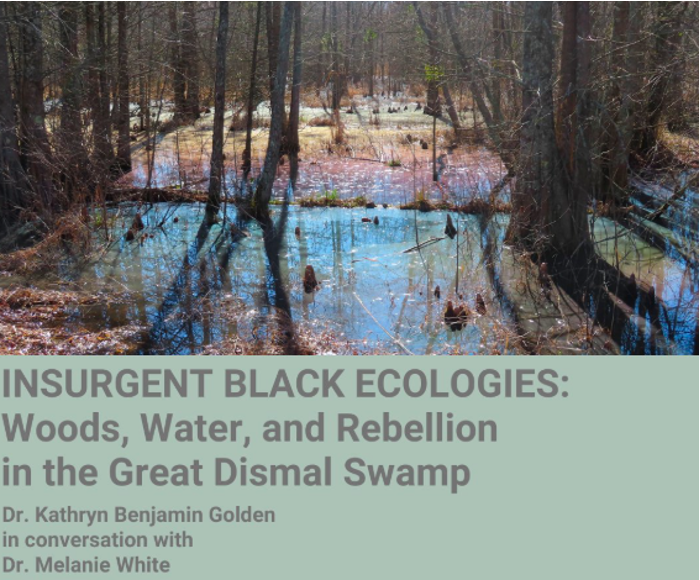

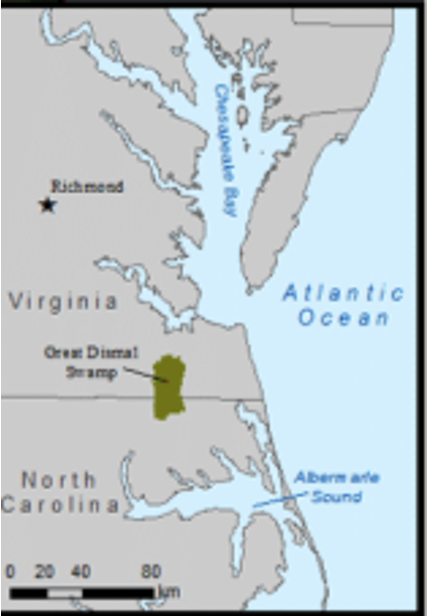
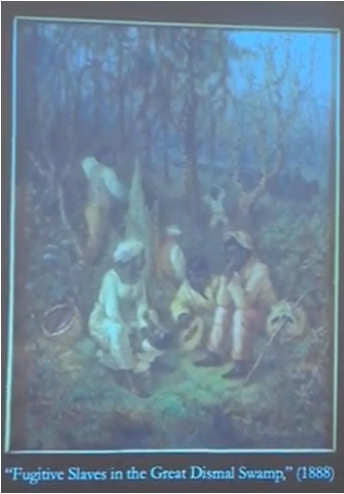
Read the section called “Trouble In The Water: Maroon Arrangements of an Insurgent Ecology by Kathryn Benjamin-Golden” in the Black Ecologies zine (all of it is amazing and highly recommended reading) at https://globalracialjustice.rutgers.edu/sites/default/files/2023-08/ISGRJ%20Blackecologies%208_17final.pdf
There is also a great recorded Sawyer seminar by Dr. Kathryn Benjamin Golden that you can check out if you want to learn more about her work at: Insurgent Black Ecologies: Woods, Water, and Rebellion in the Great Dismal Swamp
Consider the following questions in small groups:
- What is insurgent ecology?
- How is the history of maroonage in the Great Dismal Swamp an example of Black ecologies and sustainability?
- More contemporary forms and practices of insurgent ecologies continue with “Black diasporic communities continuing to plot against forms of ecological violence and domination through manifestation of the commons, maroon landscapes, the subterranean, the garden, and the cooperative. (T. Willams 2023)” Find an example of these practices by searching online or at a library for an organization or case study. Why did you select the one you did?
6.5 - NEED A TITLE FOR THIS PAGE
The last aim of Black ecologies examines how Black ecological knowledge(s) denote environmental futurities and build other-wise worlds in the here and now (Roane and Hosbey 2019; Williams 2021). At the heart of this aim is addressing the question ‘What realities and futurities do Black ecologies make possible?’
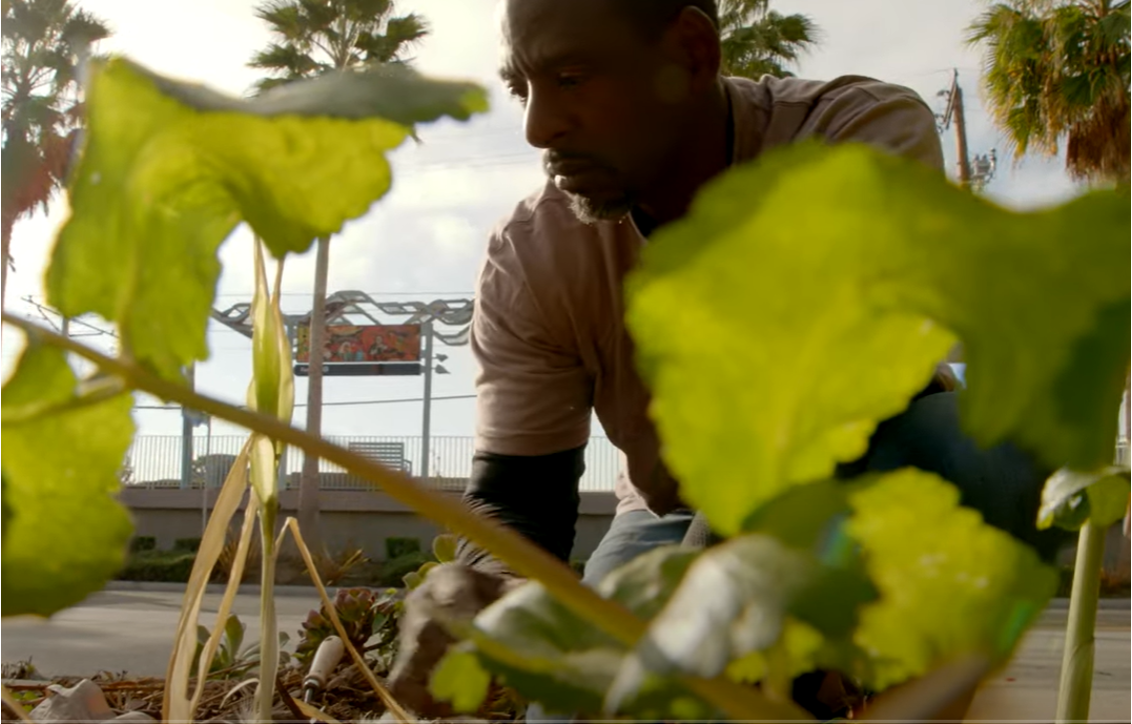
The story of Ron Finley, or ‘gansta gardner’, grounds Black ecologies within an urban reality. As a pillar of his community in L.A., Finley shares how he uses the soil as a canvas for gardening to provide nourishing food for his community and to seed food sovereignty – thereby challenging the racist food and health crisis that his community has faced by design.
Watch the TEDx talk - A guerilla gardener in South Central LA | Ron Finley
https://youtu.be/EzZzZ_qpZ4w?si=-3KndBvKftCioRDr
Consider the following questions:
- What does Ron Finley state the impact of gardening (getting kids to grow their own food) is on children?
- How is the work of Guerrilla gardening an example of Black ecologies and sustainability?
6.6 - NEED A TITLE FOR THIS PAGE - Lessons Learned with this Framework? (Maybe)
What are some of the challenges, critiques or lessons learned with this framework?
One of the critiques of Black Ecologies has been the overrepresentation of voices from the US-based context. Despite this, there has been increasing efforts to grasp the entwinements of Black Ecologies across the globe with a transnational or transterritorial lens where the experience of Black ecologies beyond the US Black diaspora opens up to the simultaneity of Black and Indigenous ecologies.
Just to mention a few collections where we see more global experiences of Black ecologies:
- The Black ecologies zine includes an account of the experiences of Afromexican@s of the Costa Chica region of southern Mexico who strive to sustain themselves from freshwater lagoons that have been subject to failed tourism waterway projects, as well as, toxic agrochemical runoff from oil-crop industries.
- The journal English Language Notes published a Special Issue that navigates the entwined histories of Black and Indigenous ecologies blurring territorial boundaries and expanding concepts of relationality. (Etherington and Kumavie 2024)

- The Black Pacific is another gleaming example of Black Ecologies captured through giants like native Black Pacific Islander Teresia Teaiwa (Teaiwa 2017), as well as, the millennial fire ecologies of Aboriginal peoples of so called ‘Australia’.

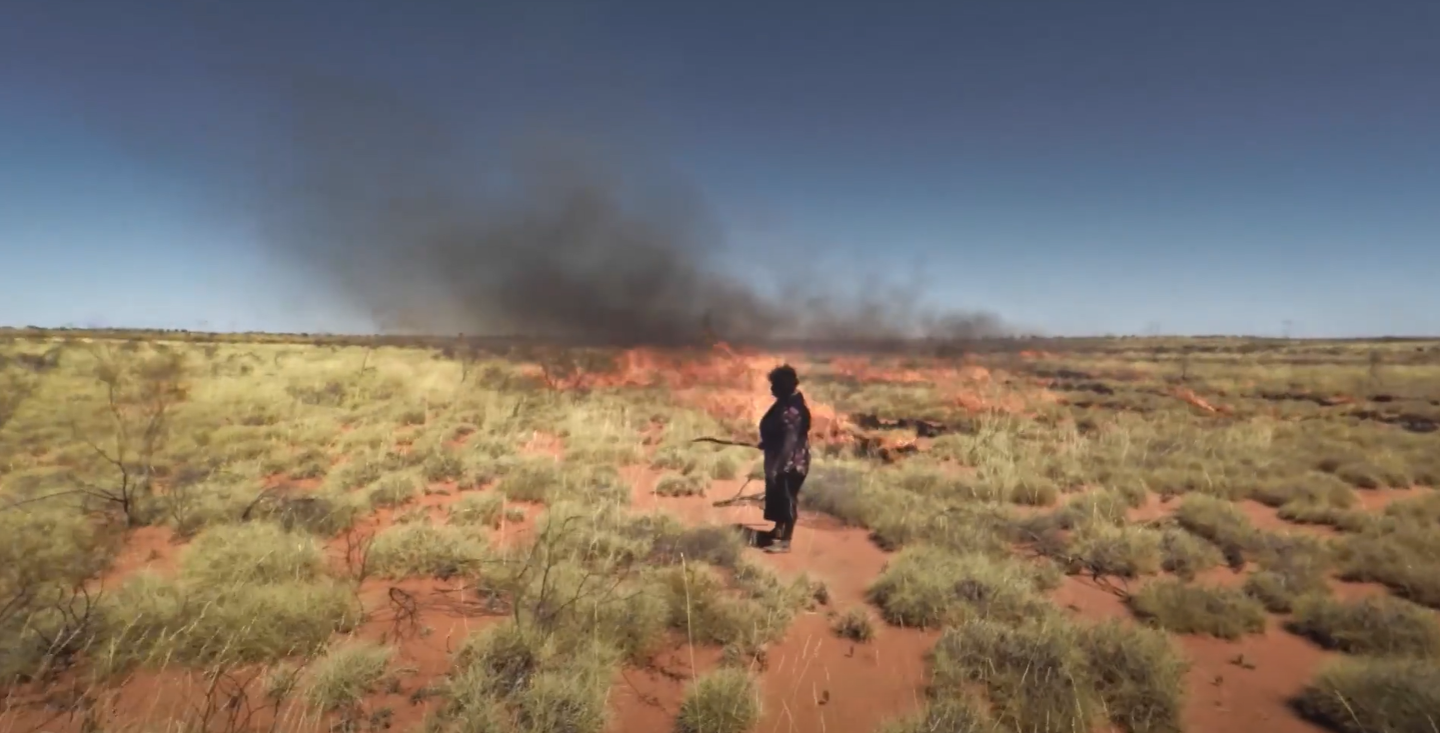
(Image is screenshot from SLICE short doc below)
Watch the following short video for a quick dive into Aboriginal fire ecologies.
How Aboriginal Australians use fire to help the ecosystem | SLICE (9:54 mins)
https://youtu.be/IXG7bSJxjIE
An additional good read is the following National geographic article “How Australia’s Aboriginal people fight fire – with fire”
- Positionality: What perspective is this video told from? Who is the intended audience?
- Positionality: How did you perceive that the different knowledge holders and practitioners are represented?
- What is the process of using fire ecology in this context (consider time of the year, size of areas targeted, who is involved, how long it takes, what plant communities are regenerated, how it affects the landscape, etc.)
- What benefits does Aboriginal fire ecology bring to people and to the environment? Are there any known drawbacks?
- What did you learn from Black fire ecologies that is new and how does it fit into or change your worldview?
Teaiwa, Teresia. “Black and Blue in the Pacific: Afro-Diasporic Women Artists on History and Blackness.” Amerasia Journal 43, no. 1 (2017): 145 –46.
6.7 - NEEDS A TITLE FOR THIS PAGE - Towards Collective Liberation? (Maybe)
Does this framework bring us closer towards collective liberation? How?
“Nobody’s free until everybody’s free” – Fanny Lou Hamer (Civil rights giant)
Liberation refers to the process of becoming free from oppression or control, while collective liberation recognizes the entanglement of multiple oppressions and argues that true freedom and well-being for any single person or group is impossible while other groups are oppressed. This view moves us past focusing on ‘individual liberties’ and recognizes the interdependence of multiple struggles, including more-than-human resistance. Collective liberation emphasizes that the health of the planet and the (in)justice of societies are deeply connected so that a deep commitment to dismantling oppressive systems that divide and dominate is required.
At its core, this last key guiding question invites us to envision an existence where uprisings that protect reciprocity, respect and responsibility with all beings on Earth can transition us away from perpetuating structures of oppression as we see with racial capitalism, extractivism, heteropatriarchy, white supremacy, genocide, ecocide, human supremacy, or where groups of beings are othered and sacrificed for the benefit of a particular group.
Black ecologies rises to the call for collective liberation by confronting historical and ongoing injustices and erasure while reconnecting with land, seeding generative ecological relationships, and building collective wellness rooted in a vibrant tradition of mutual aid and insurgent knowledge. By materializing futurities that value, respect and keep or rekindle traditions of subsisting and drawing sustenance from lands and waters locally, Black Ecologies aligns with lifeways that center fundamental necessities of a convivial existence and reject extensive overexploitation, extinction, pollution, and homogenization of the diverse tapestry of life. Through critical reflection and dialogue between Black ecologies and other critical sustainability frameworks, Black ecologies joins a global movement of collective liberation towards life-centered existences.
https://lifestyle.sustainability-directory.com/term/collective-liberation/