The History of the Study of Uteri
The uterus is an organ that is essential for the maintenance of the human species. Every human alive has been grown inside a uterus. Many of us have been pushed out by a key part of the reproductive system, the cervix. This organ is woven into the fabric of our society. But others, like the liver or lungs, have significantly less regulation by the state or scrutiny from medical professionals. This module is intended for those who wish to learn more about reproduction, both cellular and organismal, and the way that these natural processes are affected by unnatural influences.
A note about language is important. The word “natural” is used here in the way that US society typically applies it - something biological. But it also has another, more complex, meaning; it implies something that is inevitable and therefore right; it is simply true and not open to interrogation. In common conversation, “biological” implies that. When we say “she is a natural dancer” means it is inherent and not subject to questions like “how” or “why”. We use the words “natural history” here knowing that which uteri grow and change and how they are used is not actually inherent for humans. It is profoundly shaped by the societies our species have created. We use the words “unnatural” to emphasize this same point - growth and reproduction in this organ and associated structures is not inherent because it does not have the same meaning or content for all members of the human species. This very fact is a motivation for this module.
In history, many diseases, including infections like rabies and physiological disorders like epilepsy, were attributed to problems with the uterus. This is the origin of the word “hysteria”. There was a diagnosis of a “wandering uterus”, implying the organ was in the “wrong” place and therefore produced the “wrong” results.
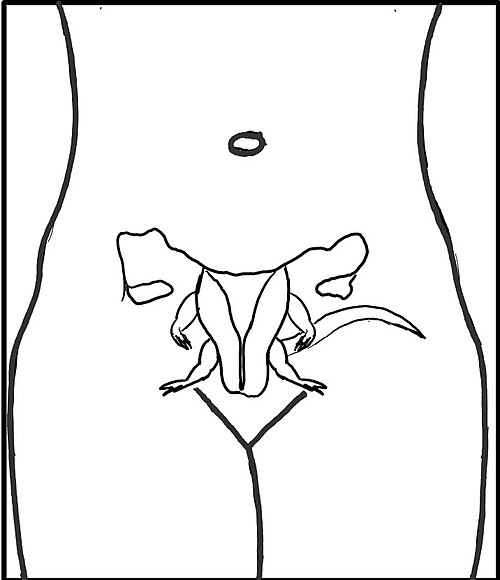
Figure 1: An illustration of what uteri capable of wandering might look like.
The uterus was the subject of much speculation. In the 1300’s, a common idea was that men were gestated on the right side of the uterus, women on the left and intersex people in the center. The dominant view was that the uterus and reproductive organs were solely for birthing babies and women took no pleasure in sex. Some considered it simply an inverted penis. In 1559 anatomist Realdo Colombo claimed to have “discovered” the clitoris and put forward that it played a role in female pleasure; his work was attacked by his contemporaries.
The scientific community, especially in the medical field, still struggles to address the needs of people with uteri. There is also significant bias in available medical data through systematically excluding women from analyses. This means some common treatments may have unknown side effects or efficacy. This lack of data corresponds with too little education and research specific to people with uteri. Lindsey Fletcher, science journalist for Frontline Genomics, writes “Whilst diagnoses of hysteria may be a thing of the past, a continuing lack of education about female anatomy and women’s health makes it clear that inequalities persist in the 21st century.” Examples include disparities in treatment of migraines, fibromyalgia, and even cancer. But diagnosis and treatment of endometriosis exemplifies this problem.
Endometriosis occurs when tissue similar to the uterine lining grows outside the uterus. It can be extremely painful and is thought to affect around 10% of people with a uterus. Because menstrual cramps can also cause pain, many people suffering from endometriosis wait months or years before a diagnosis and support. The official diagnostic tool for the condition, laparoscopy, is also painful and invasive. And treatment often consists of “take some ibuprofen” or “here’s some birth control”. Eventually, many people with endometriosis are instructed to get hysterectomies, either the removal of only the uterus and cervix or total removal, including the fallopian tubes and ovaries (for more on these organs see part 2). Various studies have found that anywhere from 15-60% of those patients still experience pain and recurrence. The lack of urgency around identifying causes and developing new treatments is remarkable.
One of the key questions in biology is “why”. Why do bats and humans have similar skeletons when one flies with wings and the other flies in an airplane? Why do horses and donkeys make offspring but mules, a hybrid of the two, cannot? And in studying the uterus, we have to ask why it is such a special organ.
Before next class, please read a review of Caliban the Witch linked below. We will discuss the introduction above and the supplemental material in the next session.
https://mronline.org/2020/11/03/the-past-as-prologue-caliban-the-witch-a-review/
No comments to display
No comments to display