5.1 Chromosomes and Genes
In animals, sex differentiation is influenced by both environmental factors such as temperature (temperature sex determination or TSD) and social factors, or by genotypes. Many genotypic sexual differentiation mechanisms occur in nature, including organisms where males and females are only found in the haploid part of their sexual cycle (UV sex chromosomes), some where males are haploid and females are diploid (haplodiploidy) as is the case in many social insects, some where males are made by eliminating the paternal genome, and some where individual females specialize in always producing female or male offspring (monogeny). Sex differentiation can also be driven by parasites such as Wolbachia in many invertebrates, where male progeny are eliminated to protect cytoplasmic transmission of the parasite.
The two best known mechanisms however are the XX/XY and ZZ/ZW sex chromosome systems, but interestingly, there is a lot of variation in sex differentiation mechanisms even within taxa. For example frogs and some fish are known to have XX/XY, ZZ/ZW and Temperature sex determination (TSD) mechanisms of sex differentiation, and even closely related species or sometimes even sub-species can evolve novel sex differentiation mechanisms, as is the case for example in Mosquitofish where sister species have either XX/XY or ZZ/ZW sex chromosomes. The variation of sex differentiation mechanisms in nature is the subject of much research, and lability of these systems is common. See for example the Tree of Sex project that is trying to map all this variation in sexual strategies in nature.
Temperature sex determination or TSD is a system where genes that influence the sexual development cascade are turned on at certain temperatures, making either males or females above or below some threshold. Whether males or females are produced at certain temperatures varies across species. Turtles, crocodilians, some fish and some frogs, lack differentiated sex chromosomes and instead use TSD. Other species without sex chromosomes do not use temperature but rather the social environment to differentiate into males or females, for example In the marine green spoonworm, an individual that lands on the ocean floor will become a female, but an individual that lands on a female will become a parasitic male. What sex you become depends on who is around you.
In mammals, fish, some snakes and frogs, and some insects, individuals that possess the Y chromosome are considered to be male, whereas individuals lacking a Y chromosome are considered female. Females are homogametic (meaning they have 2 copies of the X chromosome), while males are heterogametic (one copy of each X and Y). In birds, some fish, some snakes and butterflies females are the heterogametic sex, and the convention used in this case to denote those sex chromosomes is ZZ/ZW, rather than XX/XY. Generally individuals that possess the sex chromosome W, will become female, whereas individuals lacking the W and having only the Z chromosome will become male (ZZ male, ZW female).
However, the presence/absence of a sex chromosome is not sufficient (and sometimes not even necessary) to differentiate an individual into male or female. Sex chromosomes differ from the autosomes in that they contain non-homologous regions of DNA, that is the X and the Y chromosomes (or the Z and W) both have some genes that are absent in the other sex chromosome. In mammals, the Y chromosome typically has the SRY gene that is often associated with male differentiation, and in fact this gene is often referred to as a “masterswitch” for maleness. However, genes that are necessary for sexual differentiation are also found in the autosomes; genes in autosomal chromosomes 1, 2, 6 14, and 17 are intricately involved in sex differentiation as well. So, the sex chromosomes only provide one part of the whole, and having a Y chromosome does not determine sex, and an individual with an SRY gene, may not become male if other genes in the cascade do not complete the sexual differentiation process.
More broadly, sex chromosomes can disappear in a lineage, for example some rodents like the Amami spiny rat no longer have a Y chromosome or an SRY gene, but still make males, and further, some individuals can have a Y chromosome and never become a male, or they can become males in the absence of a Y chromosome when the SRY gene that is typically found in the Y chromosome, jumps to the X chromosome. Many of these variations result in differences in sex development in humans (see module). The same lack of sex chromosome determination has been reported in birds, where a recent study of Australian birds concluded that 3-6% of all 500 examined individuals had mismatches between their sex chromosomes and their sexual characteristics; for example, a genetic male (ZZ) was reported laying an egg. Such findings are unlikely to be unique to mammals and birds, and are likely widespread in nature.
Gynandromorphs in ZW/ZZ, and Mosaicism in XX/XY
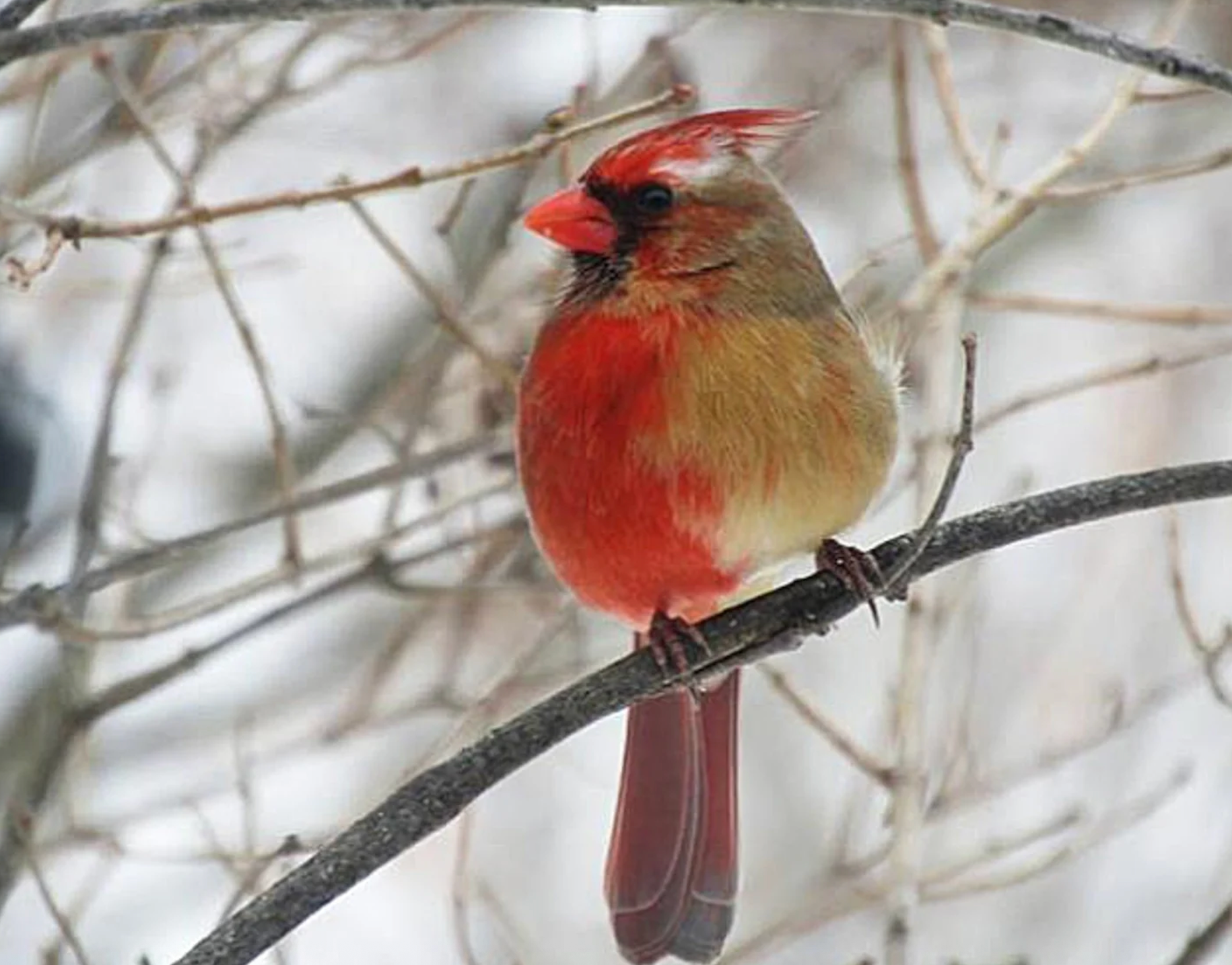
Gynandromorphs are individuals that possess a mix of phenotypically male and phenotypically female traits, generally as a result of unusual patterns of segregation of sex chromosomes in early mitosis. These gynandromorphs are commonly found in moths and butterflies, as well as birds, both of which have ZW/ZZ sex differentiation mechanisms. In early cell division in a ZW zygote, the individual usually replicates the DNA ( ZW to ZZWW) and then divides it in half in the daughter cells from (ZZWW to ZW and ZW). Sometimes however the segregation results in one cell inheriting three copies of the sex chromosome (ZWW) and the other inheriting only one (ZO). The ZWW cell has a female identity because of the presence of the W, while the ZO cell has a male identity. Further mitosis will perpetuate this unequal number of sex chromosomes resulting in individuals that can be half female and half male. For example in a recently described cardinal gynandromorph, the male half was bright red and slightly larger, while the female half was tan color and smaller (Fig 4). Since birds have only the left side of the oviduct active, this individual likely had both a testis in the right side, and an ovary and oviduct on the left side.
Fig 4. A Northern cardinal gynandromorph, the right side is genetically male (ZO), and the left side is genetically female (ZWW). Photo from Shirley Caldwell. Retrieved from https://www.nbcnews.com/feature/nbc-out/cardinal-half-male-half-female-puzzles-scientists-delights-birdwatchers-n968606
Unlike birds and butterflies, the simultaneous presence of clear phenotypical male traits and female traits is never reported in XX/XY systems, despite the known presence of unusual sex chromosome segregation patterns within the body of a single individual, here some cells may be X0 and others XYY. Rather than gynandromorphs, we call these individuals mosaics, and their resulting phenotypes are true phenotypic intermediates which we term intersex. In humans, sex chromosome mosaicism is well described in Turner Syndrome, Klinefelter syndrome and XO/XY mosaicism. The different phenotypic consequences of the same unusual sex segregation pattern between XX/XY and ZZ/ZW, is related to the specific sex differentiation mechanisms in these groups. In ZZ/ZW, somatic cells have a sex biased identity, so cells in the body with a ZZ or ZO complement will respond and differentiate as male, and those with ZW will differentiate as female. In the XX/XY system the somatic cells lack a sex bias, and they remain labile, responding to the environment in a more flexible manner because sexual differentiation is more systemic and dependent on circulating hormones. In fact, the first well understood sex differentiation mechanism was that of Drosophila where XO results in males and XX in females, meaning that sex differentiation is dose dependent. For this reason, many scientists in the 50’s understood sexual differentiation as being on a spectrum from male to female, rather than strictly binary as it was later interpreted with the discovery of the Y chromosome. Such historical perspectives can help to illuminate the importance of considering how current biological evidence informs our understanding and acceptance of variation.
No comments to display
No comments to display