4. Sustainability - What Is Being Sustained?
This question matters because it is linked to judgements about how we value certain human-nature relationships, including understanding what constitutes a ‘good life’.
What does living a ‘good life’ mean to you?
Watch the following two documentary shorts and take note of how folx conceive of what a ‘good life’ means.
The dominant paradigm taken up by (and imposed upon) most countries and international bodies seeks to uphold the status quo, described by some as ‘democratic governments’ that uphold Eurowestern conceptions of ‘representation’, and ‘human rights’ (for a notable critique see Esteva and Prakash – Human Rights: the trojan horse of recolonization?).
But what does the status quo look like from the lens of those (including imagining from the position of the more-than human) that the prevailing system marginalizes and oppresses? The status quo represents a world:
- where greenwashed renewable energy technologies continue to depend on extraction, hegemony, dispossession, ecofascism, genocide; a reality masked under the label of ‘sustainability’ produced to quell moral predicaments of consumers
- divided by highly militarized and lethal borders (under the hegemonic pretext of securing ‘national’ interests) that have severe impacts on land, water, people and migratory fauna
- where living and ‘nonliving’ beings are sacrificed and reduced to‘resources’ for extraction (stolen) and transported globally to further ‘development and urbanization’ dressed as green technological modernity
- with a widening wealth gap that concentrates power, materials and money for the few while a growing impoverished class struggles to cover basic necessities
- where the expansion of entitled tourism that ‘touts access to any place in the world’ has become an environmentally and culturally destructive force that gentrifies and homogenizes diverse lifeways and at its worst drives trafficking of people, exotics, and drugs
- the exponentially growing time spent on screens steals more and more attention from our families and communities while resulting in debilitating social isolation and consumption of tremendous amounts of energy, water, and land
- that clings to the illusion of “consumer choice” in a cycle of mass production, hyperconsumption, disposability, perpetual waste steams and toxic pollution
- where the continued promotion and expansion of modern high-tech lifestyles extracts labor from women, people of color, immigrants, and those “othered” as well as land from Original Peoples – many of these folx continue to resist indoctrination into monetized existences for which appetites are stoked in factory models of schooling that produces workers.
Who is defining/driving this hegemonic vision of sustainability?
A big part of the unprecedented changes that we are currently facing from climate change, biodiversity loss, extractivism, wars, plastic and chemical pollution, have been exacerbated, and really propelled by imperial, colonial, patriarchical and racial captialist logics (in contemporary times, key actors include the US and European nations) who have violently imposed dominance over the global economy, geopolitics, and cultural production. (For more information refer to ‘How to Hide an Empire’ – Daniel Immerwahr and ‘Harvest of Empire’ – Juan Gonzalez )
Many who employ a critical liberatory approach refuse to believe that we have to maintain or continue to sacrifice ourselves and the planet to uphold the current violent world order. Despite those who hold the power to control media and the means of production, we are called to disrupt the dominant hegemonic vision to take back control of our lives by collectively organizing towards profoundly ‘sustainable’ life-driven futurities with dignity for people that do not risk the planet’s life support systems. Starting or maintaining efforts rooted in local autonomous governance is key and as we find each other, our efforts multiply and are strengthened.
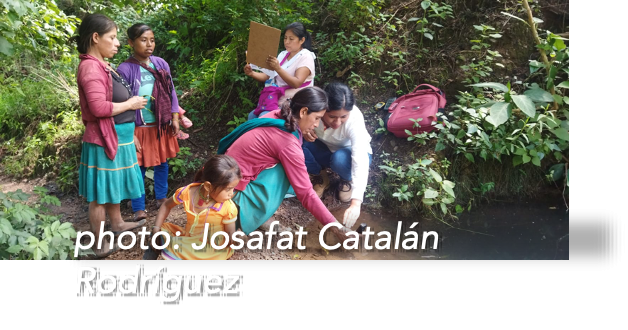
Can you think of (or find) any land-, water-, air-, or life-centered actions, programs, circles, collectives, organizations in your area that integrate an analysis of power, from say a decolonial, feminist, antipatriarchical lens (within a 15 mile radius)? If not, try doing an internet search to see what comes up.
Considering Positionality
One notable tool for thinking about ‘who is asking’ is considering positionality. Positionality refers to the social and political context that influences a persons identity in terms of race, class, gender, sexuality, ability, geography, and other dimensions influenced by privilege. Positionality statements are a tool that captures how a persons background influences the lens through which they see the world allowing for us to reflect and recognize that who a person is and where they are positioned fundamentally determines how, where, when, why they are involved with sustainability and what sustainability frameworks they practice from.
This is a growing practice in various fields, from journalism to education to (some) sciences, and is increasingly recognized as an essential component of the knowledge production process. It is key to understand that everybody’s positionality is valid and that expanding the scope of positionalities represented in sustainability is imperative to understanding power dynamics that can be transformed as we work towards life-driven sustenance rooted in dignity and autonomy.
Additional Resources on Positionality:
Camaroon, https://youtu.be/EgrFvayJhE0?si=nGHH_LJ1sqKzTRV3&t=412
Nina Gualinga, Sarayaku https://www.youtube.com/watch?v=XOPZ7nU8I3s&t=409s
Nina Gualinga, Sarayaku – Mujeres Guardianas de la Selva (watch with English autotranslation)
local autonomous governance = the act of regulating local community life in line with a peoples own definition of a ‘good life’ based on their own culture and sociopolitical structures; “its other name is dignity” (Esteva, 2003 A flower in the hands of the people)
No comments to display
No comments to display