6.4 - NEED A TITLE FOR THIS PAGE
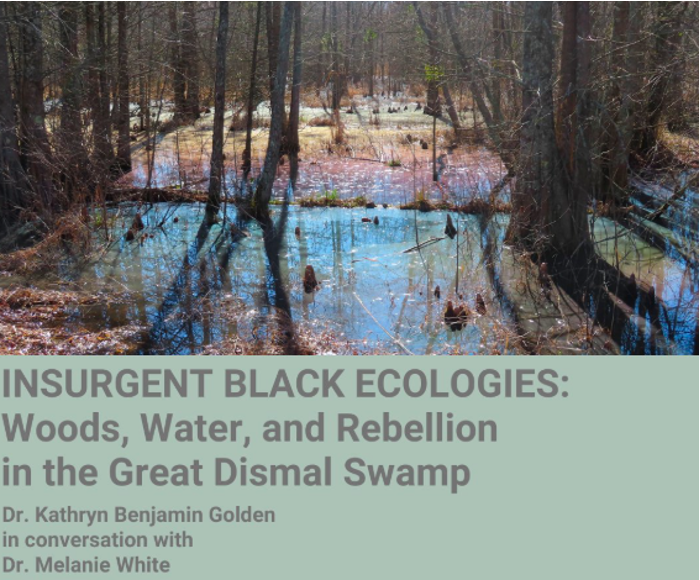
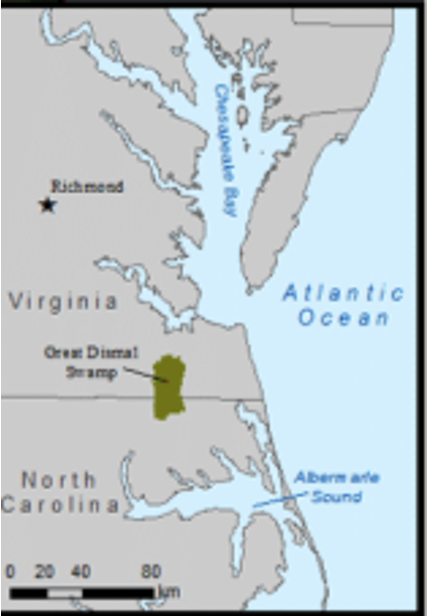
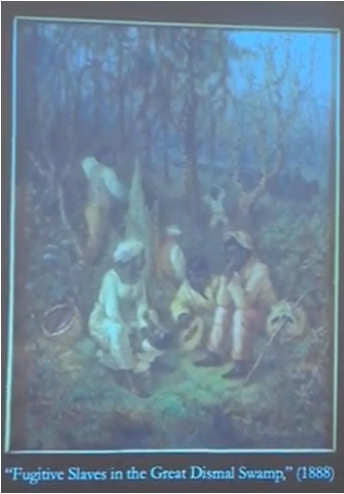
Another important aim of Black ecologies is to document insurgent and otherwise practices of Black eco-relations. Dr. Kathryn Benjamin Golden focuses on insurgent black ecologies that were essential to maroon communities, that is ‘fugitive’ people that escaped slavery in the 18th century, within in an area of the eastern so-called US known as the Great Dismal Swamp. This wetland area of over 2 km squared became home to thousands of maroons who rooted their lives as free people protected by the wilderness of the swamps for over two centuries.

Read the section called “Trouble In The Water: Maroon Arrangements of an Insurgent Ecology by Kathryn Benjamin-Golden” in the Black Ecologies zine (all of it is amazing and highly recommended reading) at https://globalracialjustice.rutgers.edu/sites/default/files/2023-08/ISGRJ%20Blackecologies%208_17final.pdf
There is also a great recorded Sawyer seminar by Dr. Kathryn Benjamin Golden that you can check out if you want to learn more about her work at: Insurgent Black Ecologies: Woods, Water, and Rebellion in the Great Dismal Swamp
Consider the following questions in small groups:
- What is insurgent ecology?
- How is the history of maroonage in the Great Dismal Swamp an example of Black ecologies and sustainability?
- More contemporary forms and practices of insurgent ecologies continue with “Black diasporic communities continuing to plot against forms of ecological violence and domination through manifestation of the commons, maroon landscapes, the subterranean, the garden, and the cooperative. (T. Willams 2023)” Find an example of these practices by searching online or at a library for an organization or case study. Why did you select the one you did?
No comments to display
No comments to display